Self-Hosted Infrastructure
Built a secure Unraid server with Cloudflare Tunnels and Zero Trust.
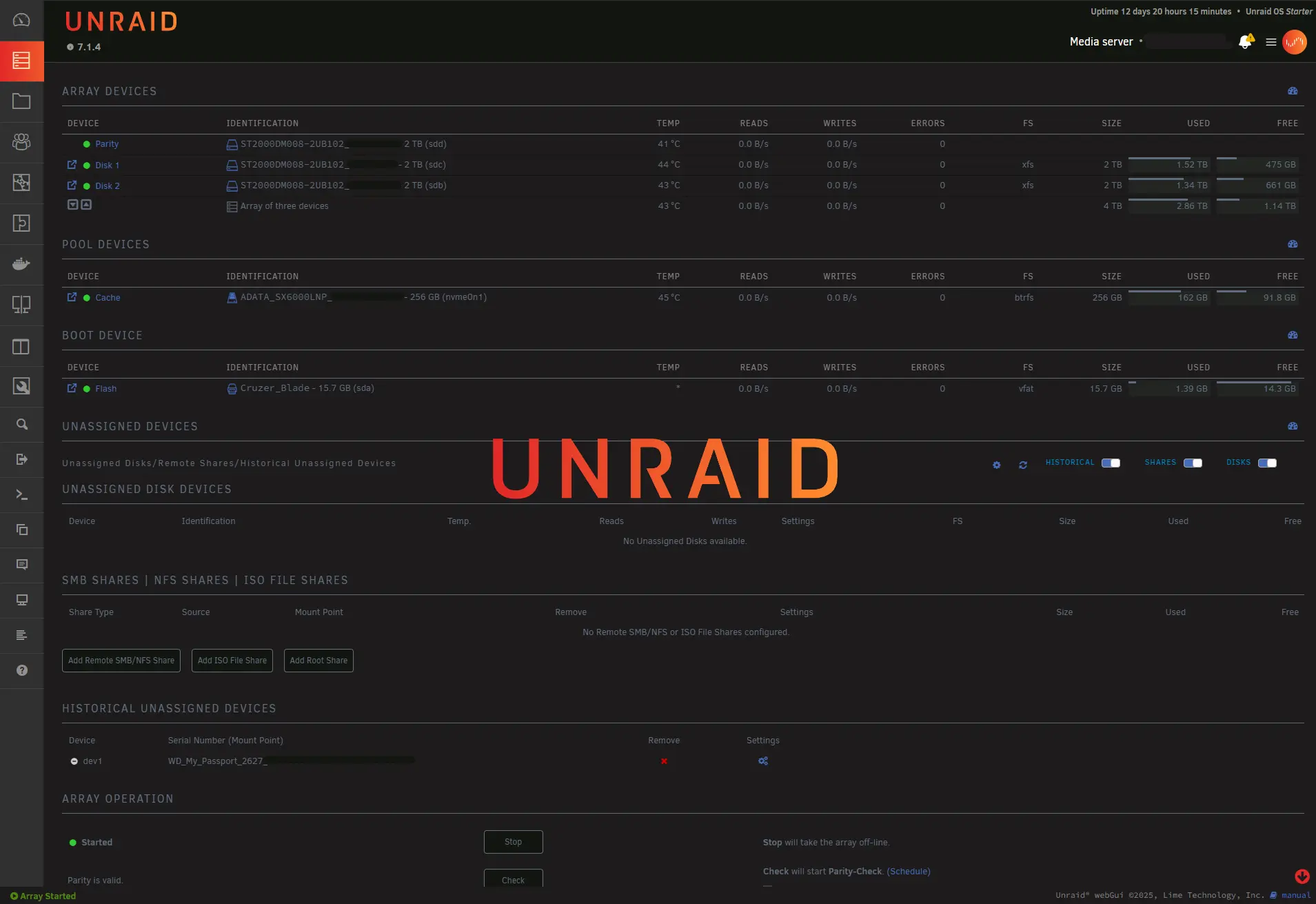
Project Overview
This self-hosted infrastructure project demonstrates my expertise in building and maintaining a secure, scalable home lab environment. The setup includes an Unraid server running Docker containers for various services, with Cloudflare Tunnels providing secure remote access through Zero Trust principles.
Application Purpose
Designed and deployed a self-hosted homelab environment to evaluate end-to-end infrastructure provisioning. After evaluating various cloud VPS alternatives, I chose to transform local hardware into a production-grade bare-metal server to gain a deeper, foundational understanding of networking, deployment pipelines, and host-level resource management.
Challenges & Solution
Problem: Establishing a secure, robust connection between a residential local network and the public internet presented significant security risks. While Cloudflare Zero Trust (Tunnels) emerged as the ideal solution to avoid exposing open router ports, the existing domain name and DNS configuration were tied to a separate third-party registrar (Porkbun).
Solution: Executed a seamless DNS migration by updating the authoritative nameservers within Porkbun to point directly to Cloudflare’s edge network. This unified the architecture, allowing Cloudflare to handle reverse-proxy routing and edge security while preserving the registration on Porkbun.
Problem: Upon deploying a continuous web-monitoring application to track server uptime and analytics, the system's automated probing requests were instantly flagged and dropped by the server's local security protocols as malicious or anomalous traffic.